Yarmouth Greyhound Results — 80 Years of Data From Norfolk’s Premier Track
Data-first. Every race. Every trap.
 Available in US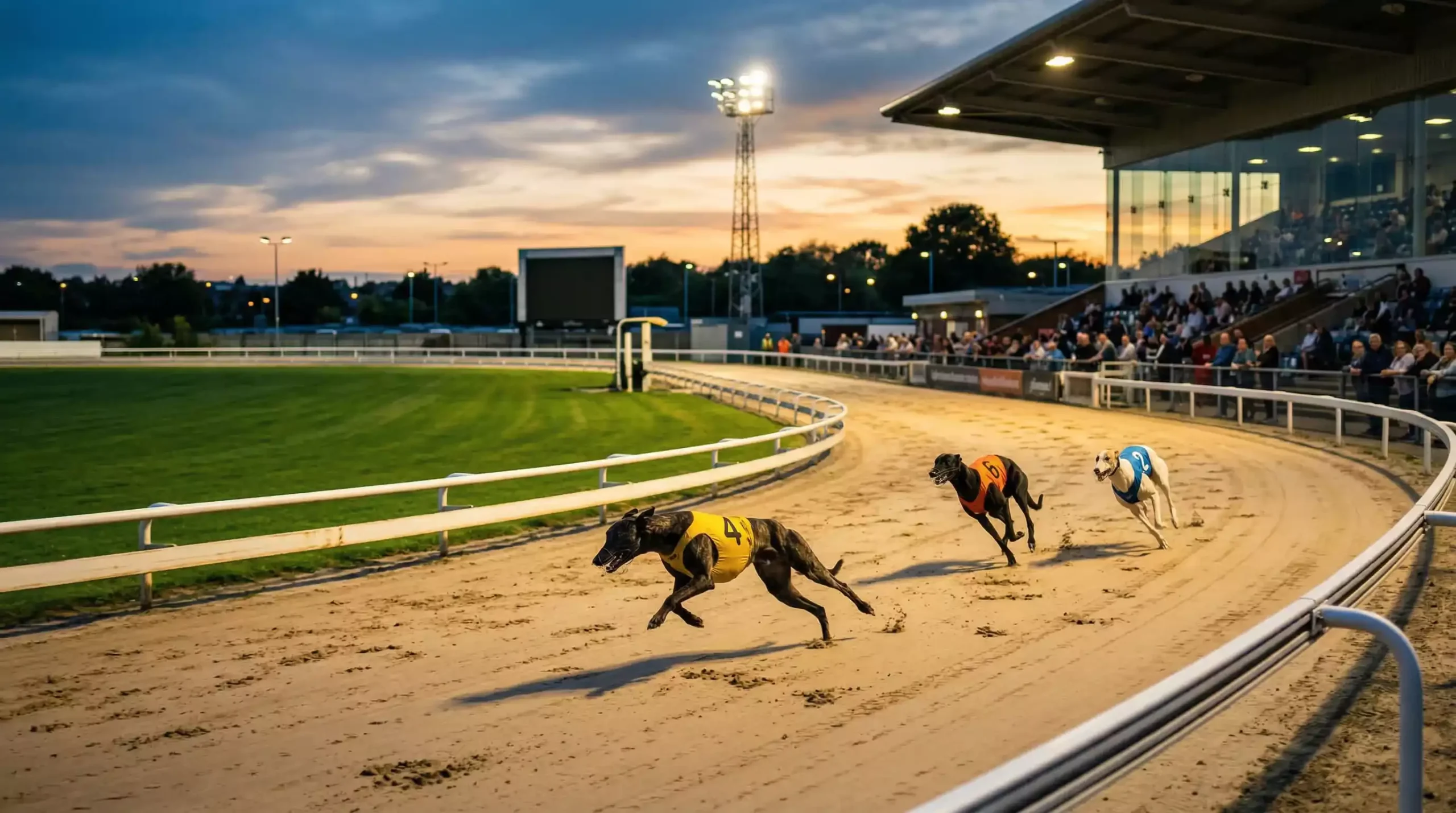
Yarmouth Stadium has been staging greyhound racing since its post-war reopening on 7 December 1946, making 2026 the venue's eightieth consecutive year of competition at Caister-on-Sea. That unbroken run places it among the longest-serving tracks in British greyhound racing — a sport that itself reaches its centenary on 24 July 2026, one hundred years after the first mechanical-hare meeting at Belle Vue, Manchester.
For anyone tracking Yarmouth greyhound results, the depth of available data is considerable. The stadium operates a 382-metre circumference with five race distances — 277, 462, 659, 843 and 1041 metres — and hosts fixtures on up to four days per week, feeding thousands of individual race outcomes into the public record every season. Each result carries finishing times, trap positions, sectional splits, trainer records and grading information. Knowing how to interpret that information separates casual observers from those who can spot patterns worth acting on.
This guide treats Yarmouth results as a dataset, not just a scoreboard. It covers the track layout and why it influences outcomes, unpacks the trap bias that emerges from Yarmouth's geometry, profiles the trainers whose kennels shape the card, and contextualises the East Anglian Derby — the stadium's flagship event since 1947. It also addresses welfare data published by the Greyhound Board of Great Britain and outlines a practical framework for betting on Yarmouth races with the numbers, rather than against them.
Every section draws on primary sources: GBGB injury reports, BGRF financial disclosures, official track specifications and verified race archives. Where the data is uncertain or contested, that is stated plainly. The aim is a single reference point for Yarmouth greyhound results — past, present and forthcoming.
Yarmouth in Numbers: The Essential Briefing
- Yarmouth's 382-metre circuit runs five distances (277 m to 1041 m), with the 462 m trip dominating race cards and hosting the East Anglian Derby — the track's flagship since 1947, currently worth £15,000 to the winner.
- Trap bias is measurable: inside draws outperform on the tighter bends, especially over sprint and standard distances. Combine trap data with trainer records and sectional splits for the strongest analytical edge.
- GBGB's 2024 welfare data shows a record-low injury rate of 1.07% and a 94% successful rehoming rate — figures that underpin the sport's regulatory standing at Yarmouth and nationally.
- Fixtures run up to four days a week via the PGR broadcast network, with racecards published in advance and final declarations on the morning of each meeting.
Latest Yarmouth Race Results and How to Read Them
Yarmouth race results follow a standardised format shared across all eighteen licensed GBGB stadiums in Britain. That consistency matters. A punter who can read a Yarmouth result sheet can apply the same skill at Romford, Nottingham or any other regulated track without learning a new system. The key is understanding what each column actually tells — and what it leaves out.
A standard race result includes the finishing order, trap number and colour, the greyhound's name, its finishing time, the distance beaten by the dog in front, a brief comment describing the run, the starting price (SP), trainer name, and grade. Some platforms append sectional times and calculated speeds, though coverage varies. The most useful results come from official sources that include sectional splits, because finishing time alone can be misleading — a dog that finished in 28.50 seconds after being blocked at the first bend tells a very different story from one that led throughout.
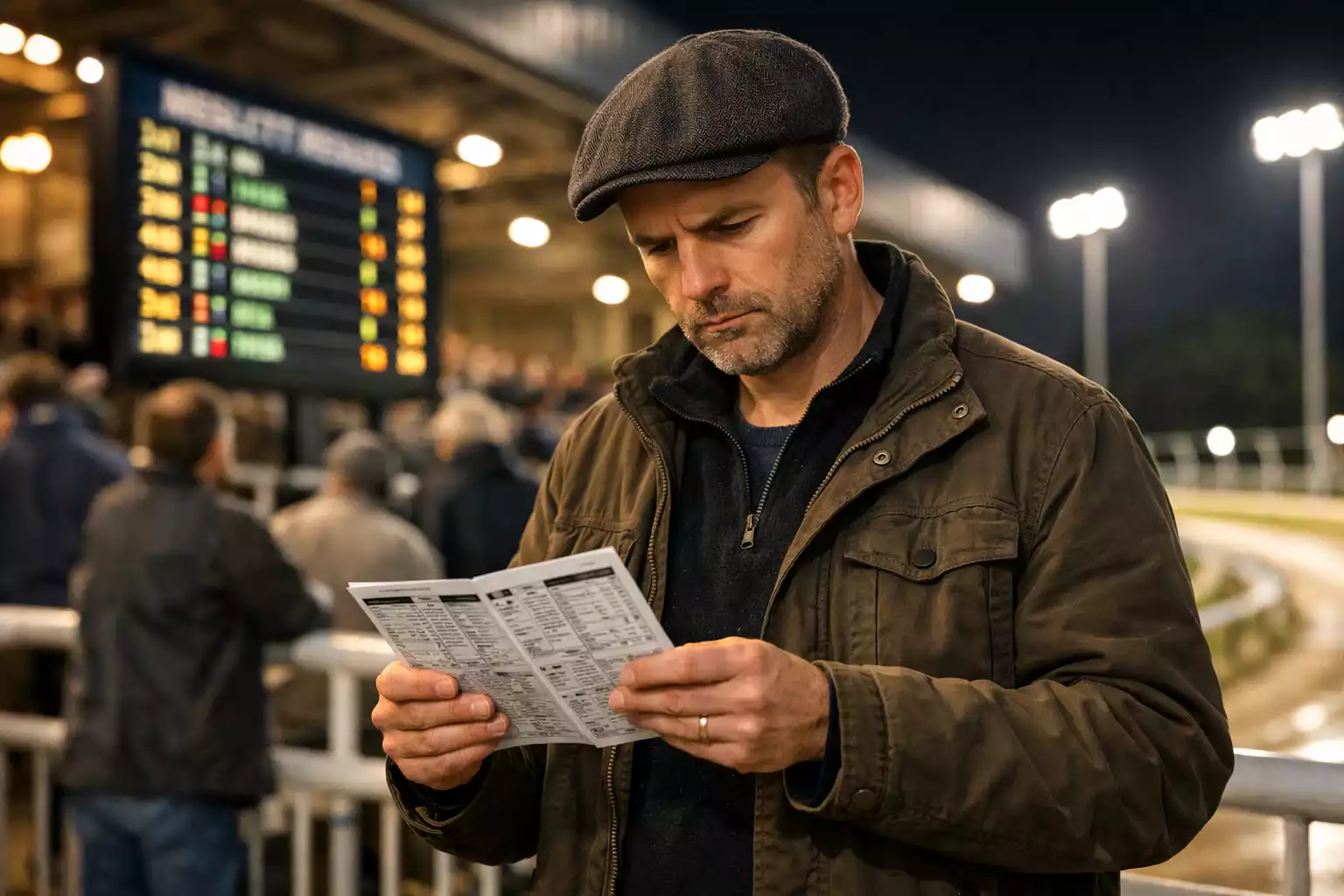
Trap numbers run from one to six, with each assigned a colour: red, blue, white, black, orange, and black-and-white stripes. These colours correspond to the jacket worn by the greyhound and the position in the starting boxes. At Yarmouth, where the first bend comes relatively quickly on the 382-metre circuit, trap position has a measurable impact on race outcomes — a subject explored in detail later in this guide.
The finishing time is recorded in seconds to two decimal places. On the standard 462-metre trip at Yarmouth, competitive A3-grade times typically fall between 28.40 and 29.20 seconds, depending on running conditions. These figures should always be read alongside the going — whether the track surface is fast, normal or slow on a given evening. A time of 28.80 on a slow surface may represent a stronger performance than 28.60 on a fast one, yet both appear unremarkable in isolation.
Grade is another element that shapes interpretation. Yarmouth cards span grades from A1 down to A11, plus open races (OR) and introductory trials (IT). An A1 race features the fastest dogs at the track, while A8 or below houses dogs still developing or returning from a break. Comparing results across grades without adjustment is like comparing sprint times at different altitudes — technically possible, but practically useless.
The run comment is often overlooked but carries real analytical weight. Common abbreviations include EP (early pace), Led (led from the front), Crd (crowded or checked in running), SAw (slow away from traps), and Bmp (bumped). A dog returning a modest time but carrying a Crd note at the second bend may well have been a more deserving winner than the actual result suggests. Experienced form readers treat these notes as critical as the finishing position itself.
Where do these results appear? The main aggregators publish Yarmouth results within minutes of each race finishing. The official Yarmouth Stadium site carries its own results archive, and GBGB publishes a centralised results database. Third-party services like Greyhound Board results pages, Timeform and various racing data providers also compile Yarmouth data with varying degrees of analytical overlay.
The spring 2026 fixtures at Yarmouth are running their usual pattern, with meetings feeding fresh results into these platforms several times a week. For those using results to inform future betting or form study, the single most important discipline is consistency: check results from the same source, account for going and grade, and never treat a single race in isolation. A dog's last five outings tell a story. Its last one tells an anecdote.
Upcoming Racecards and Meeting Schedule
Yarmouth's racing week is structured around the needs of both on-course spectators and the off-course betting market. The stadium operates a regular schedule with fixtures spread across four days — typically Monday, Wednesday, Saturday and Sunday — though the exact pattern shifts around bank holidays, open meetings and the East Anglian Derby heats in late summer. Racecards for upcoming fixtures are published in two stages: advance cards appear several days before a meeting, then final declarations confirm runners, trap draws and weights on the morning of the event.
Understanding this two-stage process matters for anyone using racecards to prepare. The advance card shows which dogs are entered and their recent form, but the trap draw — arguably the most significant variable on a tight circuit like Yarmouth — is not assigned until the final declaration. A dog with strong early pace looks very different drawn in trap one compared to trap six, and the final card is where that picture comes into focus.
Yarmouth's fixtures sit within the broader structure managed by Premier Greyhound Racing, the joint venture between Arena Racing Company and Entain that coordinates daily broadcast coverage from fourteen stadiums. PGR schedules fifty-nine meetings per week across those venues, ensuring a near-continuous flow of live racing content for bookmakers and their customers. As the late Lord David Lipsey, founding Chair of Premier Greyhound Racing, put it: "For bookmakers we will ensure a race every few minutes; for fans — the best greyhound racing across many platforms."
Yarmouth's place in that broadcast grid is secured by a five-year media contract between ARC and the Great Yarmouth Greyhound Stadium, renewed from January 2025. That deal guarantees live coverage of Yarmouth's BAGS meetings via SIS — the satellite information services network that delivers racing footage to licensed betting offices, online sportsbooks and international platforms. When a Yarmouth racecard is published, the fixture is already slotted into a national timetable designed to deliver one race from one UK track every few minutes throughout an evening session.
BAGS meetings — those funded by bookmakers through the levy system — make up the majority of Yarmouth fixtures. These are the bread-and-butter cards: graded races from A1 to A11, run primarily for the betting market. Open meetings, by contrast, attract higher-grade dogs, offer bigger prize funds and draw more on-track attendance. The East Anglian Derby heats and semi-finals in late August, followed by the final in early September, represent the peak of the open-race calendar.
For practical purposes, racecards for the next scheduled meeting at Yarmouth can be found on the stadium's official website, on GBGB's results and racecard portal, and through major bookmaker sites that carry pre-race data. Checking the card early enough to study form, identify pace maps, and compare trap statistics for each runner is the minimum preparation that separates an informed wager from a guess.
Yarmouth Track Layout: Circumference, Distances and Surface
Track geometry is not a footnote — it is the foundation on which every Yarmouth greyhound result is built. The physical dimensions of the circuit, the type of hare system, the available distances and the surface all combine to produce a running profile that is distinct from any other UK venue. Serious form study at Yarmouth starts with understanding the track itself.
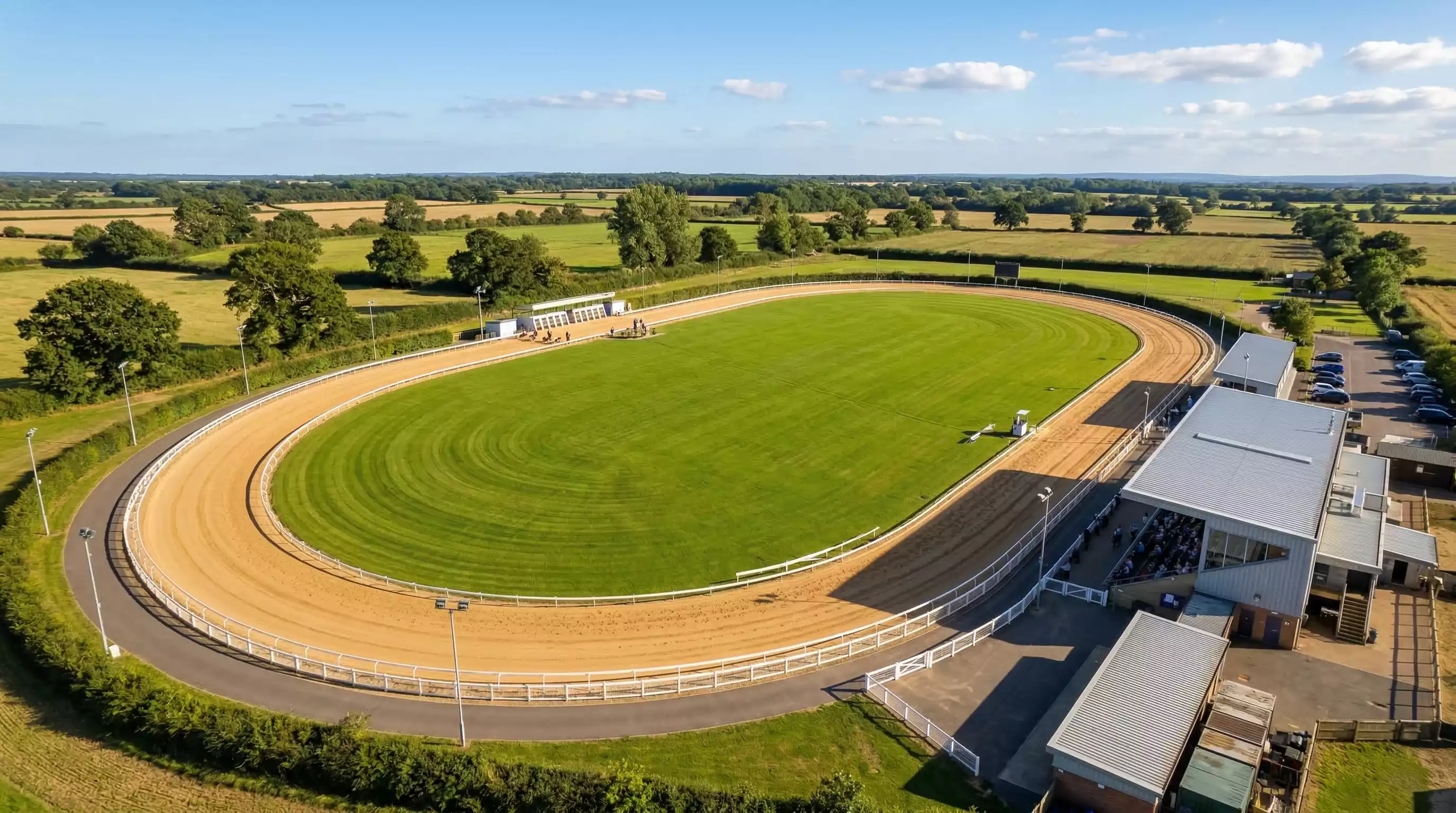
The Yarmouth circuit measures 382 metres in circumference, placing it in the mid-range among GBGB-licensed stadiums. Five race distances are offered: 277, 462, 659, 843 and 1041 metres. Each distance uses a different starting position on the circuit, and the number of bends varies from two (on the 277-metre sprint) to a significant number on the longer trips. The hare system is a Swaffham outside type, meaning the lure runs on the outside rail — a configuration that influences how dogs break from the traps and negotiate the first bend.
The stadium facilities themselves were modernised significantly in 2006 with the construction of the Len Franklin Grandstand at a cost of £2.5 million, providing 250 restaurant seats and three VIP boxes. Further track improvements worth £190,000 followed in 2012, upgrading the racing surface and infrastructure. These investments reflect a venue that has continued to reinvest despite the pressures facing the wider sport.
Race Distances and Why 462m Dominates the Card
The 462-metre trip is the workhorse of Yarmouth racing. It accounts for the majority of scheduled races on any given card, and it is the distance over which the East Anglian Derby is contested. A four-bend race, 462 metres demands a combination of early pace to secure position through the first two bends and enough stamina to sustain speed through the final straight. Dogs that excel over this trip tend to be versatile — neither pure sprinters nor out-and-out stayers, but athletes that balance both qualities.
The track record over 462 metres carries historical weight. Westmead Dance set the standard in 1977 as the first greyhound to break the 28.00-second barrier at Yarmouth over this distance, trained by John Wells. That record stood for a decade and remains a benchmark in the track's competitive history.
The 277-metre sprint is a two-bend dash where trap draw is paramount. The 659-metre middle distance introduces six bends and rewards staying power. The 843-metre trip is a genuine test of endurance, while 1041 metres is rare on the card and reserved for specialist marathon dogs. Understanding which distance suits which dog — and which distances a dog has been tried at previously — is essential context when reading Yarmouth results.
Track Dimensions and Hare System
The 382-metre circumference creates relatively tight bends compared to larger circuits like Towcester or Nottingham. Tighter bends increase the centripetal forces on dogs in the outside traps, which must cover more ground to maintain position. This geometric fact underpins much of the trap bias observed at Yarmouth and is explored in the dedicated statistics section below.
The Swaffham outside hare runs on the exterior of the track, pulling dogs towards the outside rail as they chase the lure. Outside hare systems generally reward dogs with natural early pace and a tendency to run wide, though the effect varies by distance and trap draw. At Yarmouth specifically, the hare system interacts with the relatively short run from the traps to the first bend, creating a dynamic where inside-drawn dogs can gain an early positional advantage if they show sharp initial speed.
When Does Yarmouth Race? BAGS, Open Meetings and PGR Broadcast
As detailed in the schedule section above, most Yarmouth fixtures are BAGS meetings funded through the bookmaker levy. These provide the regular Monday, Wednesday, Saturday and Sunday cards. Start times vary: evening meetings typically begin around 19:00, while matinee cards may run from early afternoon.
Open meetings supplement the BAGS schedule with higher-quality racing. The East Anglian Derby week in late August and early September is the headline fixture, but the stadium also stages open races throughout the season that attract entries from top kennels across East Anglia and beyond. The distinction matters for results analysis: BAGS meetings are graded affairs with runners matched by ability, while open meetings can produce less predictable outcomes as dogs from different grading structures meet on neutral terms.
Trap Statistics at Yarmouth: Which Box Wins Most?
Trap bias is not superstition — it is geometry made measurable. Every greyhound track in Britain produces a statistical skew in favour of certain trap positions, and Yarmouth is no exception. The stadium's 382-metre circumference, its outside Swaffham hare and the short run to the first bend all combine to create a bias profile that any serious analyst of Yarmouth greyhound results should know before studying a racecard.
The core principle is simple: the position of the starting box determines how far a dog must travel to reach the first bend and how much room it has to manoeuvre once it gets there. Inside traps (1 and 2) have a shorter path to the rail and can secure position with less effort, while outside traps (5 and 6) must either show overwhelming early pace or accept running wider through the turn. Over hundreds of races, this physical reality produces measurable differences in win rates.
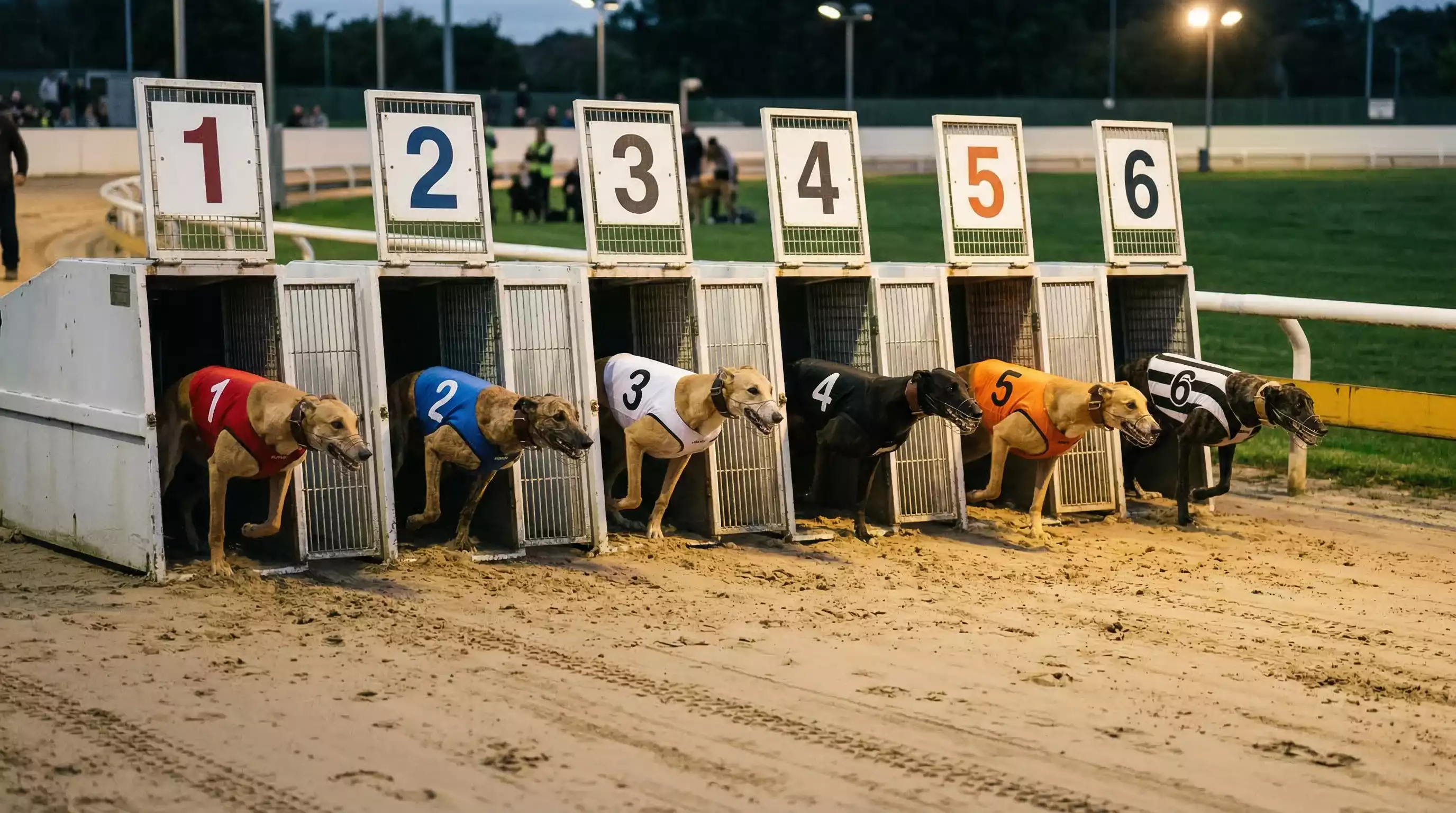
A racing greyhound covers the ground at an average speed of approximately 65 km/h, according to the Scottish Animal Welfare Commission's 2023 report on greyhound racing. At those velocities, even marginal differences in running distance — the kind created by trap draw on a tight circuit — translate into measurable time gaps.
Win Rates by Trap Number
Aggregate trap statistics at Yarmouth, drawn from multi-season samples, consistently show that traps one and two outperform on the standard 462-metre distance. This is broadly typical of tracks with outside hare systems and tight bends, where inside-drawn dogs can cut to the rail early and save ground. Trap one often records a win rate several percentage points above the theoretical average of 16.7% (one winner from six runners), while trap six tends to underperform that baseline.
On the 277-metre sprint, the bias sharpens further. With only two bends and a short run to the first turn, inside traps carry an even greater advantage. The race is effectively decided in the first fifty metres, and a dog drawn in trap one that shows decent break speed has an inherent positional benefit that no amount of raw pace from trap six can reliably overcome.
Over longer distances — 659 metres and above — the trap bias tends to flatten. More bends mean more opportunities for position changes, and the sustained pace required over six or more turns allows faster dogs to work their way through the field regardless of starting position. The trap draw is still a factor, but it diminishes in relative importance as the race distance increases.
These patterns hold as averages over large samples. On any individual race night, a strong trap-six dog with outstanding early pace can defy the statistics entirely. The value of trap data lies not in predicting individual results but in identifying systematic edges that compound over time.
How Track Geometry Shapes Trap Bias at Yarmouth
The mechanics behind trap bias are rooted in physics. On a 382-metre circuit, each bend has a radius that forces dogs on the outside to travel a longer arc than those on the inside. At racing speed, that difference might only amount to a body length per bend — but over four bends on a 462-metre race, it can add up to two or three lengths of cumulative disadvantage for a wide-running dog.
The Swaffham outside hare adds a layer of complexity. Because the lure runs on the outer rail, dogs naturally orient towards the outside as they chase. This tendency creates crowding pressure on the first bend, where the field converges from six separate starting positions into a narrower running line. Inside-drawn dogs that break cleanly can secure a rail position while outside dogs are still adjusting their line — a fleeting advantage that often proves decisive.
Weather and surface conditions can modulate these effects. A rain-softened track may slow inside runners who hug the rail (which tends to churn first), partially neutralising the geometric advantage. Conversely, a fast, dry surface amplifies the benefit of the shortest route. Reading trap statistics without accounting for prevailing conditions is like reading a map without checking the scale.
For practical application, the trap bias data at Yarmouth is most useful when combined with other form indicators. A dog drawn in trap one with strong early-pace form on its last three outings is a qualitatively different proposition from a slow-away dog drawn in the same trap. The box number sets the stage; the dog's running style determines what happens on it.
The East Anglian Derby: Yarmouth's Showpiece Event
The East Anglian Derby is the race that defines Yarmouth in the national greyhound calendar. First staged on 3 September 1947 — barely a year after the stadium's post-war reopening — the Derby has been run annually over the standard 462-metre trip and currently offers a winner's prize of £15,000. It is the most prestigious event in the East Anglian racing region and one of the recognised feature competitions across the GBGB circuit.
The race format follows the classic knockout structure. Heats are run in late August, with the fastest qualifiers progressing to semi-finals and then to the final, typically held in early September. The condensed timetable tests both form and durability: a dog that reaches the final has navigated three rounds in roughly two weeks, and fatigue or minor injuries picked up in the heats can blunt the sharpest performers by the time the final arrives. Studying the heat and semi-final results is essential context for anyone analysing the final outcome.
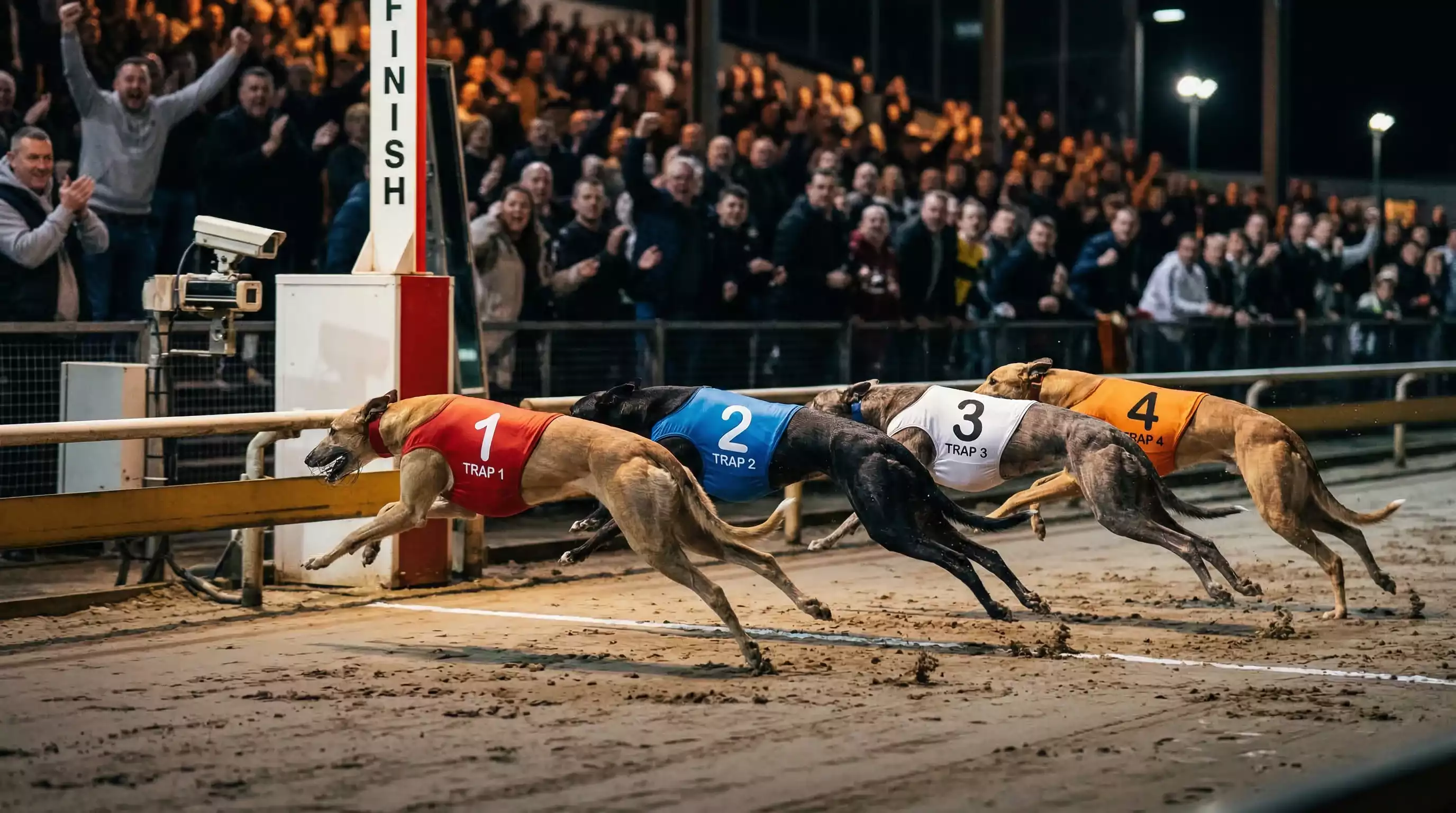
No account of the East Anglian Derby is complete without the name Charlie Lister OBE. The Nottingham-based trainer holds an extraordinary record of twelve Derby victories at Yarmouth, a dominance that speaks to both the quality of his kennels and his understanding of what the track demands. Lister's dogs have tended to combine sharp early pace with the tactical intelligence to handle Yarmouth's bends cleanly — a profile that, as the trap statistics demonstrate, plays directly to the track's geometric strengths for well-drawn inside runners.
Other trainers have left their mark on the Derby's history. Mark Wallis — who built his training career in Norfolk and became one of the most decorated handlers in British greyhound racing — is closely associated with Yarmouth. In 2012, Wallis trained Blonde Snapper to victory in the English Greyhound Derby, the sport's most valuable race which now offers a winner's prize of £175,000 and a total fund of £235,000. That same year coincided with £190,000 worth of track improvements at Yarmouth, a period that represented a high point for the stadium's competitive standing.
Patrick Janssens is another name embedded in Yarmouth Derby history, having trained the winner in both 2020 and 2024. His recent successes demonstrate that the competition remains open to trainers who bring quality dogs prepared specifically for the demands of this track and distance. Angela Harrison, operating from her East Anglian base, has been another consistent presence on Yarmouth cards, frequently competing at open-race level.
The East Anglian Derby carries a significance beyond its prize fund. It is an occasion that brings the Yarmouth racing community together — a focal point for the season that generates higher-than-usual on-course attendance, national media coverage within the greyhound press, and a quality of racing that the regular BAGS card cannot match. For those tracking Yarmouth greyhound results across the year, the Derby provides a reference point: the performances recorded during Derby week often reveal the true ceiling of the track's competitive standard in any given season.
Trainers Who Dominate Yarmouth: Wallis, Janssens, Harrison
Trainer identity is one of the most underused data points in greyhound form analysis. At Yarmouth, a relatively small group of kennels accounts for a disproportionate share of winners, and understanding which trainers operate effectively at this track provides an edge that raw speed figures alone do not capture.
Mark Wallis is the most prominent name in Yarmouth's training ranks. Operating from his Norfolk kennels, Wallis has been a fixture on the UK greyhound scene for decades, accumulating multiple Champion Trainer titles at national level. His runners at Yarmouth are typically well-prepared for the track's specific demands — the tight bends, the outside hare system, the emphasis on early pace over the standard 462-metre trip. When a Wallis-trained dog appears on a Yarmouth card, it warrants closer inspection regardless of grade, because his strike rate at this venue historically outperforms his already impressive national average.
Patrick Janssens represents a different training profile but an equally effective one. Based in the wider East Anglian region, Janssens has built a reputation through targeted campaigns at open-race level, as his Derby record at Yarmouth attests. His approach tends to peak dogs for specific competitions rather than grinding through the weekly BAGS circuit — which makes a Janssens entry in an open race at Yarmouth worth particular attention.
Angela Harrison completes the trio of trainers most commonly associated with competitive performance at Yarmouth. Harrison operates from East Anglia and regularly fields runners across the full range of grades on the Yarmouth card. Her presence is felt in the mid-to-upper grades, where consistent kennel management and local track knowledge combine to produce a reliable stream of placed and winning performances. She may not carry the headline profile of Wallis or the Derby-specific pedigree of Janssens, but her day-to-day contribution to Yarmouth racing is substantial.
Beyond these headline names, Yarmouth benefits from a broader ecosystem of licensed trainers operating across the UK. According to the Scottish Animal Welfare Commission's 2023 report, there were 573 licensed residential kennels operating across the UK in 2022. The dogs that race at Yarmouth are drawn from this national pool, though local and regional trainers naturally dominate the regular BAGS cards due to the logistics of transporting dogs to the track.
For form analysis purposes, trainer data should be layered on top of individual dog performance. A dog stepping up in grade at Yarmouth under a trainer with a strong venue record is a qualitatively different prospect from the same dog under a handler unfamiliar with the track. Results databases that allow filtering by trainer and venue provide the most actionable version of this insight — and Yarmouth, with its concentrated core of regular trainers, is a track where this filter yields particularly clear signals.
Greyhound Welfare and Track Safety at Yarmouth
Welfare data is not peripheral to the discussion of Yarmouth greyhound results — it is central. The physical condition of racing greyhounds directly affects performance, and the regulatory framework that governs their care shapes the sport's long-term viability. GBGB publishes detailed injury and retirement statistics annually, and the 2024 dataset offers the most current picture of where British greyhound racing stands on animal welfare.
The headline figure from the GBGB 2024 Injury and Retirement Data is the on-track injury rate: 1.07%, calculated from 3,809 injuries across 355,682 individual race runs on licensed tracks. That is the lowest rate ever recorded under the current reporting methodology. Alongside this, the on-track fatality rate has fallen to 0.03% — half the 0.06% recorded in 2020. These numbers apply to the sport nationally, and Yarmouth, as a GBGB-licensed venue, operates under the same welfare protocols and veterinary requirements as every other regulated track.
Retirement outcomes have also improved substantially. GBGB data shows that 94% of greyhounds leaving the racing population — 5,795 dogs in the 2024 reporting period — were successfully rehomed or retained by their connections. The breakdown shows 27.1% kept by their owner or trainer, 55.8% placed through charitable rehoming organisations, and 11.0% rehomed directly by the owner or trainer to new families. This compares with an 88% successful rehoming rate in 2018, representing a meaningful upward trend over six years.
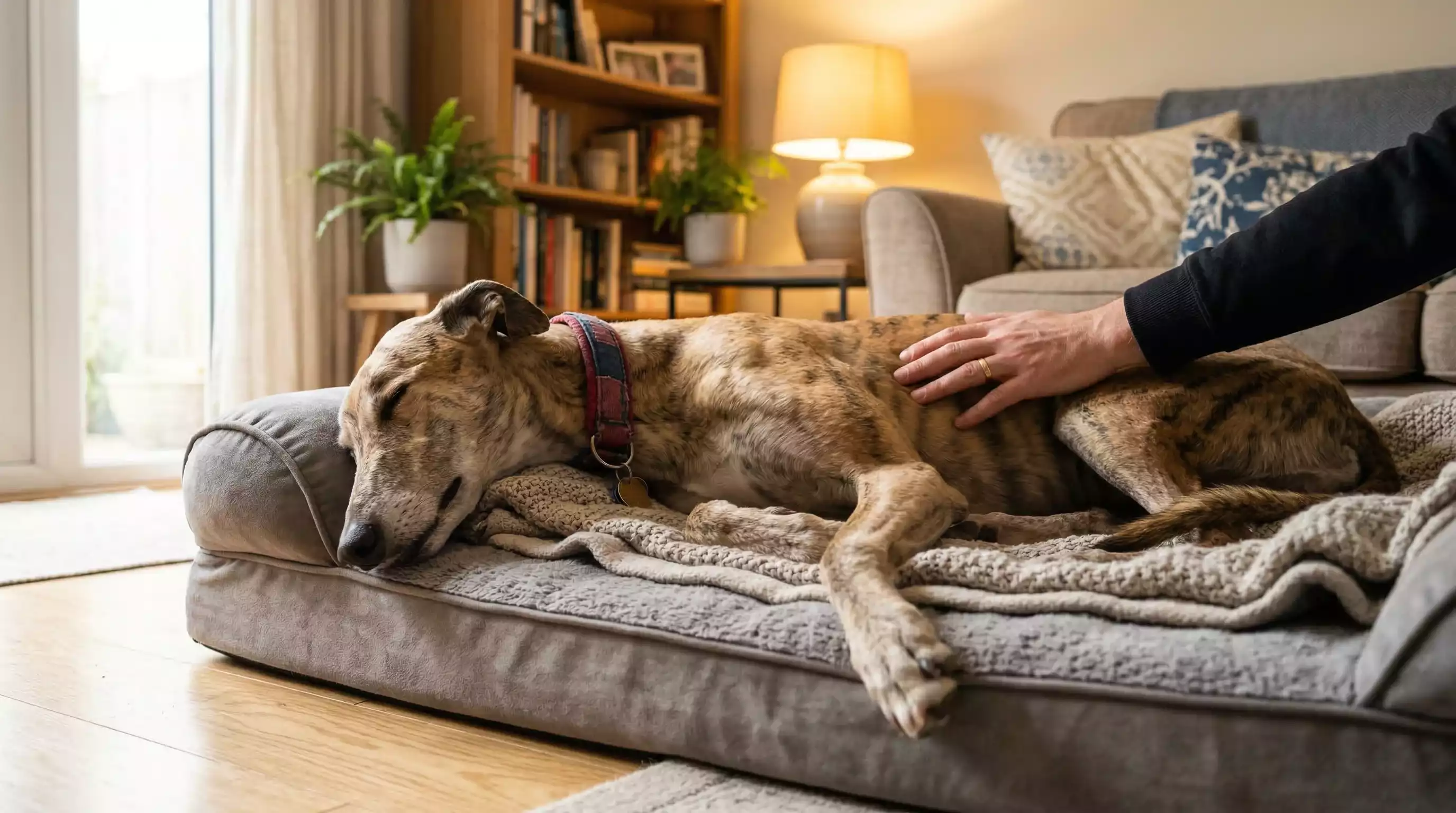
Perhaps the most striking welfare metric concerns economic euthanasia — dogs put down because the cost of treatment was deemed unviable. In 2024, that figure stood at just three, compared to 175 in 2018. That 98% reduction is attributable in part to the Injury Retirement Scheme, which has paid out nearly £1.5 million in veterinary treatment funding since December 2018. The scheme effectively removed the financial barrier that previously led trainers and owners to opt for euthanasia when dogs sustained injuries that were treatable but expensive.
Mark Bird, CEO of the Greyhound Board of Great Britain, commented on the 2024 data by noting that the initiatives introduced over recent years had become embedded and were helping to consolidate significant progress — adding that the reduction in economic euthanasia was a source of particular pride for the organisation.
None of this should suggest that welfare concerns have been fully resolved. The sport operates in a political environment where greyhound racing bans have been legislated in Wales — the Prohibition of Greyhound Racing Bill passed its Stage 1 vote in the Senedd on 16 December 2025 with 36 votes in favour and 11 against, and cleared Stage 2 committee amendments in January 2026 — with the ban set to take effect no earlier than April 2027 and no later than April 2030 — and proposed in Scotland, where the Greyhound Racing (Offences) Bill was introduced in April 2025 with Scottish Government support. These legislative moves reflect genuine public concern about animal welfare in racing, and the industry's response in 2026, a year that also marks the sport's centenary, will significantly shape its trajectory.
At Yarmouth specifically, the standard GBGB welfare requirements apply: licensed veterinary attendance at every meeting, mandatory injury reporting, post-race examination of any dog that finishes lame, and kennelling standards overseen by the regulatory body. The track's continued investment in surface maintenance — as evidenced by the 2012 upgrade programme — also contributes to reducing injury risk, since surface quality is one of the primary determinants of on-track safety across the sport.
For bettors and form analysts, welfare data provides indirect but important context. A track and a sport that invest in dog safety tend to produce more consistent racing outcomes, because healthy dogs perform more predictably. The improving welfare metrics are not just a moral story — they are a data quality story, and one that supports the reliability of the results coming out of Yarmouth and its fellow GBGB venues.
How to Bet on Yarmouth Greyhounds: A Practical Guide
Betting on greyhound racing at Yarmouth follows the same mechanics as any other GBGB-licensed track, but the specific characteristics of this venue reward a particular approach. The 382-metre circuit, the trap bias profile, and the concentrated pool of regular trainers all create patterns that an informed bettor can exploit — not by chasing tips, but by reading the data that every racecard makes freely available.
The starting point is understanding the price. Greyhound odds are offered in two primary forms: board price (the price available at the time of betting, which fluctuates) and Starting Price (SP), which is the officially returned price at the moment the traps open. For those betting online rather than on-course, Betfair Starting Price (BSP) offers an exchange-derived alternative that often differs from the traditional SP. Knowing which price mechanism applies — and when the best value typically appears in the market cycle — is a basic competence that separates recreational bettors from methodical ones.
At Yarmouth, the most common bet types are win (backing a dog to finish first), each-way (covering both a win and a place, typically first or second in a six-dog race), and forecast (predicting the first two in correct order). Tricast betting — first three in order — is available but carries substantially higher variance. For the standard BAGS card, win and each-way bets represent the most manageable risk-reward profile, especially when combined with the trap and form analysis outlined earlier in this guide.
The financial scale of the market provides useful context. The total prize fund across all GBGB competitions reaches £15,737,122, with the English Greyhound Derby at the apex offering £175,000 to the winner. These figures demonstrate a sport with meaningful financial infrastructure behind its betting market — this is not a niche or unregulated product.
The funding mechanism matters too. The British Greyhound Racing Fund collected £6.75 million in the 2024-25 financial year from voluntary bookmaker contributions, calculated at 0.6% of greyhound-racing turnover. That money flows back into prize funds, welfare schemes and track development. When a bettor places a wager on a Yarmouth race, a fraction of that stake ultimately supports the racing product they are consuming — a closed loop that, unlike some gambling markets, directly connects the bet to the spectacle.
Practical bankroll discipline is as important as selection skill. The temptation on a multi-race Yarmouth card — with twelve or thirteen races on a typical evening — is to bet on every race. This is almost always a losing strategy. The most effective approach is selective: identify two or three races where the form data, trap draw, trainer record and going conditions all align to suggest a genuine edge, and confine betting activity to those opportunities.
Staking should be flat or proportional to perceived edge — never escalating to chase losses. Greyhound racing at Yarmouth produces results every few minutes during a meeting, and the rapid pace of action can erode discipline quickly. Setting a session budget before the first race, and adhering to it regardless of interim results, is the single most important betting practice. The data is there to be used. The discipline to use it wisely is the bettor's own responsibility.
Frequently Asked Questions About Yarmouth Greyhound Racing
What days does Yarmouth Stadium hold greyhound racing?
Yarmouth Stadium typically runs greyhound meetings on Monday, Wednesday, Saturday and Sunday, though the exact schedule can shift around bank holidays, open meetings and feature events like the East Anglian Derby. The majority of fixtures are BAGS meetings — funded by the bookmaker levy system and broadcast live through the SIS network via Premier Greyhound Racing. Evening meetings generally start around 19:00, with occasional matinee cards in the afternoon. The most reliable way to confirm the next scheduled meeting is to check the official Yarmouth Stadium website or the GBGB racecard portal, where final declarations and trap draws are published on the morning of each fixture.
How many race distances are available at Yarmouth?
Yarmouth offers five race distances: 277 metres (sprint, two bends), 462 metres (standard, four bends), 659 metres (middle distance, six bends), 843 metres (stayer) and 1041 metres (marathon). The 462-metre trip is the most frequently scheduled and serves as the championship distance for the East Anglian Derby. The circuit measures 382 metres in circumference and uses a Swaffham outside hare system. Each distance produces a distinct racing dynamic — the 277-metre sprint is heavily influenced by trap draw and break speed, while the longer distances increasingly reward stamina and tactical positioning through multiple bends.
Where can Yarmouth greyhound results be found after a meeting?
Results from Yarmouth meetings are published within minutes of each race finishing across several platforms. The official Yarmouth Stadium website carries its own results archive, while the GBGB provides a centralised database covering all licensed UK tracks. Third-party services including Timeform, Sporting Life and dedicated greyhound racing data platforms also compile Yarmouth results with varying levels of additional analysis. For the most useful form study, look for sources that include sectional times, run comments and trap-draw information alongside finishing positions and times — these details provide the context needed to evaluate a result properly rather than simply noting who won.
Sources and Methodology
The information in this guide draws on a combination of primary regulatory data, official track records and verified industry publications. Welfare and injury statistics are sourced from the Greyhound Board of Great Britain's 2024 Injury and Retirement Data, published in early 2025. Financial data relating to the British Greyhound Racing Fund comes from the BGRF's official disclosures for the 2024-25 financial year. Track specifications — circumference, distances and hare type — are drawn from Greyhound Racing Times and cross-referenced with the stadium's own published information.
Historical material, including East Anglian Derby records and stadium milestones, is referenced from Greyhound Racing Times' Yarmouth Stadium profile, Greyhound News UK's East Anglian Derby history, and the Yarmouth Stadium official site. Regulatory context is informed by the Scottish Animal Welfare Commission's 2023 report and media contract details from Arena Racing Company.
Trap statistics and form analysis are based on aggregated race data from publicly available results databases. Where specific figures are cited, the source and year are identified in the text. Where data is estimated or extrapolated, this is stated.
As Sir Philip Davies, Chair of the Greyhound Board of Great Britain, noted upon his appointment: "Licensed greyhound racing is a fantastic sport which has held an important place in the fabric of our country for almost a century." That institutional continuity is reflected in the depth of the data available — and in the commitment of this guide to presenting it accurately.
