
Greyhound Welfare and Track Safety at Yarmouth — Data, Debate and What the Numbers Show
 Available in US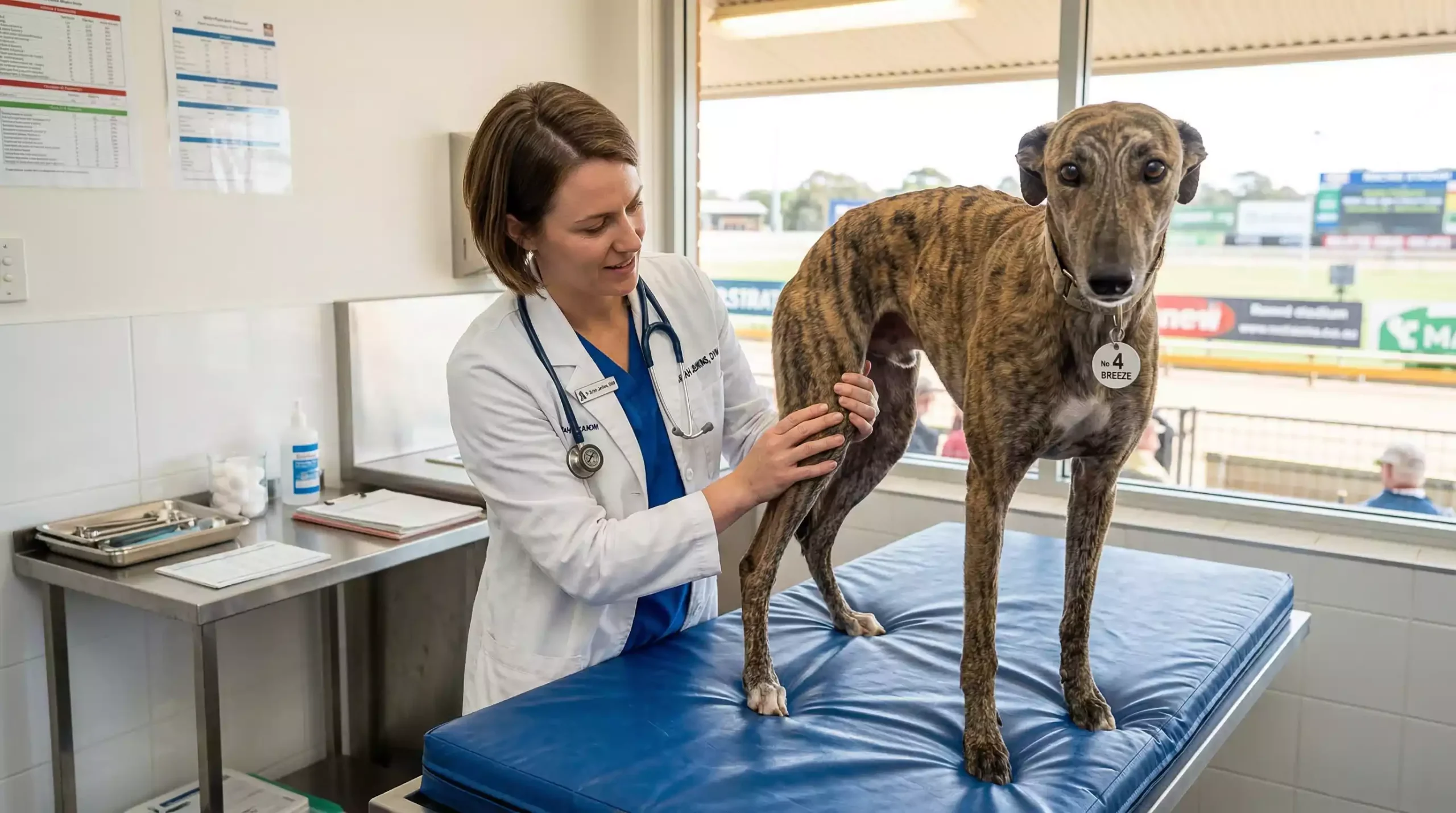
The Welfare Question That Follows Every Race
The numbers behind the welfare debate. That is where any honest assessment of greyhound welfare must start — not with campaigning rhetoric, not with industry press releases, but with the data published annually by the Greyhound Board of Great Britain and scrutinised by welfare organisations, politicians and the media. The welfare of racing greyhounds is the most contested aspect of the sport, and at Yarmouth Stadium, as at every licensed track in Britain, it shapes the regulatory framework within which every meeting is staged. Across the 18 GBGB-licensed stadiums in the UK — a system encompassing roughly 500 trainers, 3,000 kennel staff and 15,000 registered owners — the welfare standards that apply at Yarmouth are set centrally and enforced through licensing.
The 2024 data from GBGB — the most recent complete dataset available — tells a story of improvement that is real and measurable, but also of ongoing challenges that the industry’s critics are unwilling to overlook. Injury rates are at record lows. The proportion of greyhounds successfully rehomed after racing has risen significantly. The number of dogs euthanised for economic reasons has fallen by 98% since 2018. These are not contested figures; they are published by the regulator, drawn from mandatory reporting by licensed tracks, and available for independent verification.
At the same time, greyhound racing in Britain faces legislative challenges that have no precedent. Wales has passed a ban. Scotland is pursuing its own prohibition bill. The UK Culture Secretary has stated that there are no plans to extend a ban to England, where Yarmouth and the remaining licensed tracks continue to operate. This article examines the welfare data in detail, considers the criticisms and the industry’s responses, and places Yarmouth within the broader picture of a sport that is improving its welfare record while simultaneously fighting for its survival.
What happens after racing is in rehoming and retirement.
Injury Data 2024: What the GBGB Numbers Actually Show
The headline figure from the GBGB’s 2024 Injury and Retirement Data is an overall injury rate of 1.07% — meaning that 3,809 injuries were recorded across 355,682 individual race runs on licensed tracks. That is the lowest rate since GBGB began publishing comprehensive injury data, and it represents a sustained downward trend that the regulator has tracked across multiple years. To put it in context, roughly one in every ninety-three race runs results in a recorded injury, a figure that includes everything from minor muscle strains to serious fractures.
The breakdown by injury type is instructive. The most common category in 2024 was hind-limb muscle injuries, with 1,013 cases accounting for 0.28% of all runs. Hock injuries followed at 718 cases and 0.20%, with wrist injuries third at 566 cases and 0.16%. These three categories together represent the bulk of the injury total, and they share a common biomechanical origin: the stress of high-speed cornering on a left-handed circuit. The greyhound’s nearside limbs — the left legs — bear the load through every bend, and over repeated races the cumulative strain can produce soft-tissue damage that ranges from minor to career-ending.
The track fatality rate — dogs that die on the track during or immediately after a race — has halved since 2020. The 2024 figure stands at 0.03%, down from 0.06% four years earlier. In absolute terms, this means a very small number of deaths across a very large number of race runs, but the industry is clear-eyed about the fact that any fatality is a welfare failure. The reduction reflects investment in track safety — surface preparation, bend camber, veterinary presence at every meeting — and in the regulatory standards that GBGB imposes on licensed stadiums.
GBGB mandates that every licensed track provides on-site veterinary cover for every meeting. Injuries are reported to the regulator within a fixed timeframe, and the data is compiled into annual reports that are publicly available. The reporting system is not optional: tracks that fail to comply face sanctions up to and including licence revocation. This mandatory reporting framework is a significant strength of the GBGB system, because it means the data — whatever its limitations — is comprehensive rather than selective. Every injury at every meeting at every licensed track is counted.
Trends over time add important context. The 1.07% injury rate in 2024 is not an isolated data point; it sits at the bottom of a declining curve that has been consistent over several years. The improvements correlate with specific interventions: tighter track-preparation standards, more frequent veterinary inspections, and the introduction of mandatory kennelling periods that prevent dogs from racing before they are physically ready. Whether these correlations are causal is harder to prove definitively, but the direction of the data is clear. The sport is getting safer by the measures it publishes, and the rate of improvement has been sustained rather than one-off.
The limitations of the data deserve acknowledgement. The injury categories are broad, and the published figures do not distinguish between injuries that resolve within days and those that end a dog’s career. A hind-limb muscle injury that requires a week’s rest is recorded in the same category as one that requires surgery and months of rehabilitation. That aggregation can make the data appear either better or worse than the lived reality, depending on which end of the spectrum the reader focuses on. More granular data — outcome tracking by injury type, for instance — would strengthen the picture, and welfare organisations have called for exactly this.
Life After Racing: Retirement and Rehoming Numbers
The proportion of greyhounds successfully placed in retirement — either retained by their owner or trainer, or rehomed through charities and adoption networks — reached 94% in 2024, according to the GBGB data. That figure represents 5,795 dogs out of the total leaving the sport, and it compares with 88% in 2018. The six-percentage-point increase over six years translates to hundreds of additional dogs finding homes rather than facing uncertain outcomes.
The routes into retirement break down into three main channels. The largest, at 55.8%, is rehoming through charitable organisations — the Greyhound Trust and a network of independent rescue groups that operate across the UK. These charities assess retiring greyhounds, provide initial veterinary care and behavioural evaluation, and match dogs with adopters. The second channel, at 27.1%, is retention by the dog’s owner or trainer, who keep the animal as a pet or a companion to their kennel dogs. The third, at 11.0%, is placement arranged directly by the owner or trainer outside the formal charity network.
The 94% figure is the industry’s strongest welfare statistic, and it is cited frequently in responses to criticism. It represents a genuine achievement — the outcome of sustained investment in rehoming infrastructure, public awareness campaigns that have normalised greyhound adoption, and regulatory pressure on trainers and owners to account for every dog that leaves racing. The Greyhound Trust alone rehomes thousands of dogs annually, and the breed’s suitability as a pet — gentle temperament, low exercise needs relative to size, and a calm disposition that adapts well to domestic life — has created a market for retired racers that did not exist at this scale twenty years ago.
Critics point out that 94% is not 100%. The remaining 6% — several hundred dogs per year — includes animals that are euthanised for medical reasons (injuries or conditions that cannot be treated), dogs that are exported, and dogs whose destination is categorised as unknown or unaccounted for. Lisa Morris-Tomkins, Chief Executive of the Greyhound Trust, has noted that the number of greyhounds that never get the opportunity to live in a loving home remains unacceptable, and that fundamental improvements in injury and rehoming metrics are still needed. That view — supportive of the progress made but insistent that it is not enough — represents a middle position between the industry’s narrative and the abolitionist stance of organisations that want racing banned outright.
At Yarmouth, as at every licensed track, trainers are required to register the destination of every dog that leaves their kennel. This paper trail, enforced by GBGB, is the mechanism that makes the 94% figure verifiable. It is not a self-reported survey; it is a regulatory requirement backed by potential sanctions. Whether the reporting is perfectly accurate in every case is a question that welfare auditors continue to examine, but the framework itself is considerably more robust than the informal systems that preceded it.
The Injury Retirement Scheme and Veterinary Support
One of the most tangible welfare interventions in British greyhound racing is the Injury Retirement Scheme, administered by GBGB and funded through a combination of industry levies and charitable contributions. Since its launch in December 2018, the scheme has paid out nearly £1.5 million towards veterinary treatment for injured greyhounds that might otherwise have been euthanised on cost grounds.
The scheme operates on a simple principle: if a greyhound is injured during racing and the cost of treatment exceeds what the owner or trainer is willing or able to pay, the Injury Retirement Scheme can cover the veterinary fees on the condition that the dog is retired from racing and placed into the rehoming system. This creates a financial safety net that removes the economic incentive for euthanasia — a critical intervention, given that the most dramatic welfare statistic in the GBGB data is the reduction in economic euthanasia from 175 dogs in 2018 to just 3 in 2024, a decline of 98%.
Mark Bird, CEO of the Greyhound Board of Great Britain, has highlighted this figure as evidence that the industry’s welfare initiatives are delivering results. On the publication of the 2024 data, Bird stated that the initiatives of recent years have taken hold and are helping consolidate significant progress, with particular pride in the near-elimination of economic euthanasia. The Injury Retirement Scheme is the primary mechanism behind that reduction, and its continued funding is a priority for the industry.
Veterinary provision at licensed tracks extends beyond the Injury Retirement Scheme. Every GBGB meeting is attended by a qualified veterinary surgeon who examines dogs before racing, monitors the meeting for injuries, and provides immediate treatment to any dog that is hurt. The pre-race examination — a physical inspection that checks for lameness, fitness and any condition that would make racing unsafe — is a mandatory step that prevents unfit dogs from competing. Post-race, any dog that is involved in an incident or that the veterinarian suspects may be injured is examined and, if necessary, referred for further treatment.
The cost of this veterinary infrastructure is borne by the tracks and, indirectly, by the betting industry through the levy system. It is a significant operational expense, and one that smaller tracks with tighter margins feel acutely. But the alternative — racing without mandatory veterinary cover — is not an option under GBGB licensing rules, and the welfare improvements that the data shows are directly linked to the presence of qualified professionals at every meeting.
The Critics: What Welfare Campaigners and Legislators Say
The welfare improvements documented in the GBGB data have not silenced the sport’s critics. A substantial coalition of animal welfare organisations, political campaigners and legislative bodies argue that greyhound racing is inherently harmful, that the improvements are insufficient, and that the only ethical outcome is the abolition of the sport. The legislative landscape in 2026 reflects this pressure.
In Wales, the Prohibition of Greyhound Racing (Wales) Bill was introduced in the Senedd on 29 September 2025 and cleared Stage 2 with a majority of 36 votes to 11. The ban is expected to come into force between April 2027 and April 2030, making Wales the first UK nation to outlaw the sport. There is currently one licensed track in Wales — Valley Greyhounds in Ystrad Mynach — and its closure will be the direct consequence of the legislation.
In Scotland, a separate bill — the Greyhound Racing (Offences) (Scotland) Bill — was introduced on 23 April 2025 by Mark Ruskell MSP, with the Scottish Government supporting the general principles. The bill was informed in part by the Scottish Animal Welfare Commission’s 2023 report, which concluded that “where gambling and commercial activity are present, the risks to welfare outweigh the likely positive aspects” and that the average greyhound bred for racing in Scotland has lower welfare than the average companion dog in the population.
In England, where Yarmouth and the majority of licensed tracks operate, the political position is different. The UK Culture Secretary stated in Parliament that there are no plans to ban greyhound racing in the rest of Britain, a position that provides regulatory stability for tracks like Yarmouth in the medium term. But the Welsh and Scottish developments have created a precedent that campaigners will inevitably seek to extend. The industry is aware of this, and its response — improving welfare data, investing in rehoming, and engaging with regulatory scrutiny — is at least partly a strategy to maintain what its leaders describe as the sport’s social licence.
The critics’ position is not monolithic. Organisations like the Greyhound Trust work within the sport, pushing for better outcomes while accepting that racing continues. Abolitionist groups like GREY2K USA and the Cut the Chase Coalition argue that no level of improvement justifies the continued use of greyhounds for commercial racing. The data serves both sides selectively: the industry points to falling injury rates and rising rehoming percentages; the critics point to the cumulative totals. GREY2K USA Worldwide calculates that between 2017 and 2024, GBGB tracks recorded 35,168 injuries and 1,353 on-track deaths, with a further 3,278 dogs euthanised for other reasons — numbers that campaigners argue make the baseline unacceptable regardless of the trend.
The industry’s response to the legislative pressure has been multi-layered. The appointment of Sir Philip Davies as Chair of the GBGB in 2025 signalled a more politically engaged posture, and the GBGB has increased its public communications around welfare data, investing in transparency as a deliberate strategy to counter the narrative advanced by abolitionist campaigners. The Greyhound Commitment — the industry’s formal welfare strategy — sets targets for injury reduction, rehoming rates and veterinary provision, and the annual publication of data against those targets is designed to demonstrate accountability. Whether this is sufficient to forestall legislative action in England remains an open question. The political mood in Wales and Scotland suggests that the welfare argument, however improved, may not be enough on its own to secure the sport’s future in every jurisdiction.
The full picture is in our Yarmouth greyhound results guide.
Welfare at Yarmouth: Track-Specific Context
Yarmouth Stadium operates under the same GBGB welfare framework as every other licensed track in Britain. The veterinary provision, injury reporting, pre-race inspections and post-retirement tracking requirements that apply nationally apply at Yarmouth. There is no separate Yarmouth welfare regime; the standard is set centrally by the regulator and enforced through the licensing system.
What makes Yarmouth worth considering specifically is its track characteristics and how they interact with injury patterns. The 382-metre circumference produces bends that are tighter than at some larger venues, and tighter bends generate higher lateral forces on the dogs’ limbs. The most common injury types nationally — hind-limb muscle injuries, hock injuries and wrist injuries — are all associated with the biomechanics of cornering, which means that track geometry is a relevant factor in the overall injury profile. Whether Yarmouth’s specific injury rate is above, below, or in line with the national average is not published in the GBGB data at individual-track level, which is a limitation of the current reporting framework.
The surface at Yarmouth — sand-based, maintained by a dedicated grounds team, and benefiting from the natural drainage of the coastal Norfolk location — is managed with safety as a primary consideration. Track preparation between races focuses on the bends, where the sand is displaced by the force of dogs cornering at speed, and the surface depth is monitored to ensure it provides adequate cushioning. A surface that is too hard increases impact forces on landing; one that is too soft reduces grip and can cause dogs to slip through turns. The grounds staff at Yarmouth work within tight tolerances to maintain a surface that minimises both risks.
The stadium’s investment in facilities — the £2.5-million Len Franklin Grandstand in 2006, the £190,000 track improvements in 2012 — reflects a commitment to maintaining a venue that meets modern safety and welfare standards. These are not cosmetic upgrades. The grandstand provides covered viewing that keeps spectators comfortable but also houses the veterinary facilities and the racing office from which the meeting is managed. The track improvements directly addressed the racing surface and bend profiles that affect dog safety.
For anyone following Yarmouth greyhound results, the welfare context is not separate from the racing. A dog that is withdrawn from a card after a pre-race veterinary inspection is a welfare system working as intended. A dog that records a slow time because it was nursing a minor injury that has since been treated is a data point that only makes sense with welfare knowledge. The numbers behind the welfare debate are not an abstract policy discussion for the punter who studies results at this track — they are part of the information set that explains why certain dogs appear or disappear from the card, and why the form book sometimes tells a different story from the one the raw times suggest.
