
Greyhound Rehoming and Retirement — Charities, Adoption and Life After Racing
 Available in US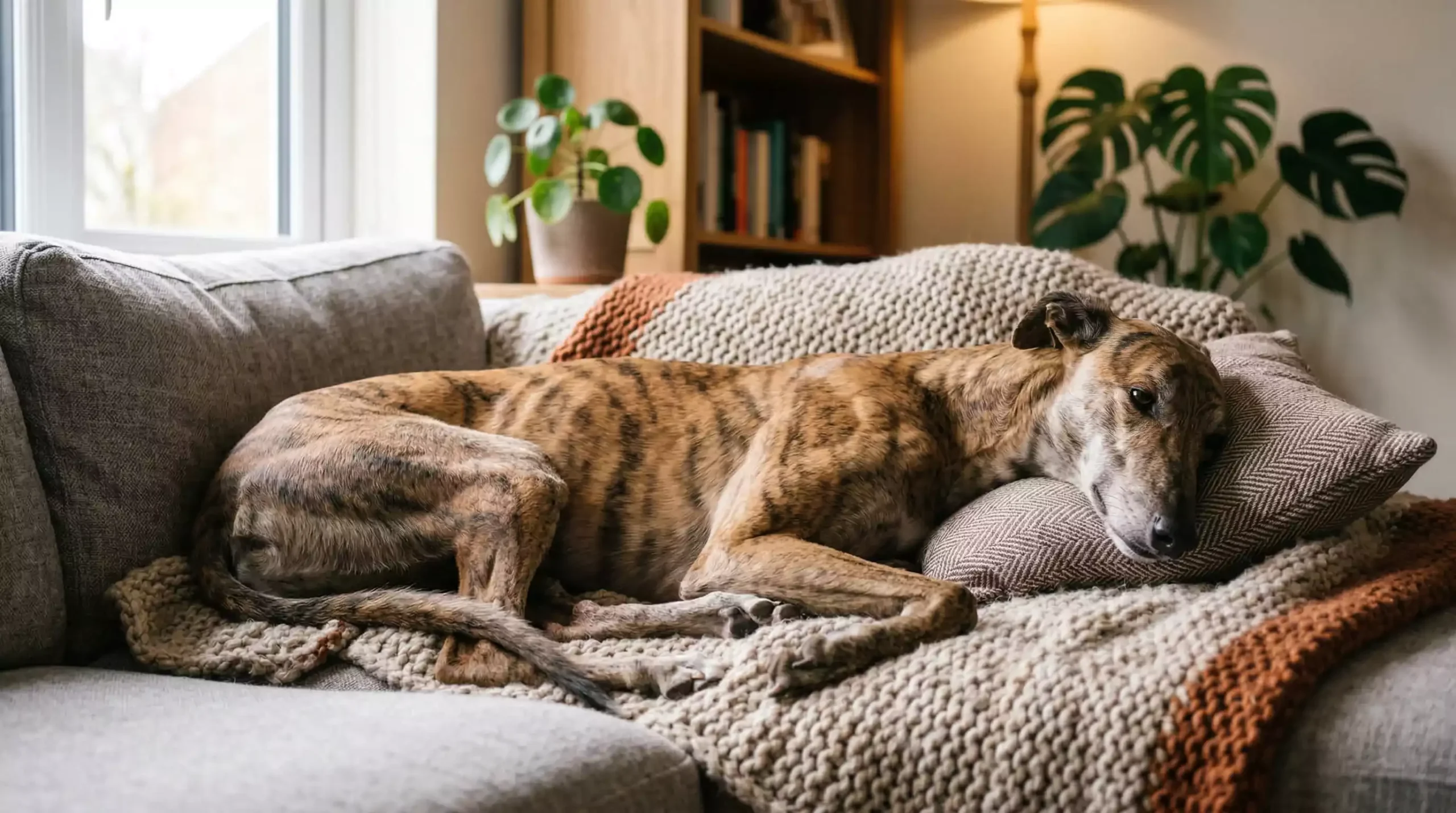
94% of greyhounds leaving UK racing are successfully placed in retirement homes — and the remaining 6% are the focus of an ongoing debate that touches everything from industry funding to the political legitimacy of the sport itself. Life after the track is not an afterthought in modern greyhound racing; it is a metric by which the industry measures itself and by which its critics judge it. The numbers have improved dramatically over the past decade, but the question of whether they are good enough depends on whom you ask.
This guide traces the retirement pathways available to greyhounds leaving the licensed circuit, profiles the charities and organisations that manage the rehoming process, and examines what adoption means in practical terms for the people who take a retired racer into their homes. The story of a racing greyhound does not end at the finish line — and for thousands of dogs each year, the chapter that follows is the longest one.
The figures behind it are in welfare and track safety.
Retirement Pathways: Owner, Trainer and Charity Routes
The GBGB’s 2024 retirement data breaks down the 94% successful placement figure into three primary pathways. Of the greyhounds leaving racing that year, 27.1% were retained by their owner or trainer — kept as pets within the household that had managed their racing careers. A further 55.8% were rehomed through registered charities, the largest of which is the Greyhound Trust. The remaining 11.0% were placed by the owner or trainer into homes outside their immediate household, typically through personal networks or local advertising.
The three pathways reflect different relationships between the dog and the people responsible for it. Owner-retained dogs stay in familiar surroundings with people they know, which minimises the stress of transition. Charity-rehomed dogs enter a structured process — assessment, fostering, matching with a suitable family — that is designed to maximise the chances of a successful long-term placement. Trainer-placed dogs occupy a middle ground: the placement is personal rather than institutional, which can be quicker but less supported if problems arise.
The pathway proportions have shifted over the past decade. Charity rehoming has grown as the major trusts have expanded their capacity, while economic euthanasia — dogs destroyed because no home could be found and the cost of continued care was deemed prohibitive — has fallen to negligible levels. The 2024 figure was three dogs euthanised for economic reasons across the entire licensed circuit, compared with 175 in 2018. That 98% reduction is the statistic the industry cites most frequently in defence of its welfare progress, and it is a genuine achievement by any measure.
The 6% that are not successfully placed include dogs that die of natural causes during or after racing, dogs euthanised for medical reasons following untreatable injuries and a small number whose outcome is not recorded in the data. The unrecorded category is the one that draws the most scrutiny from welfare campaigners, because it represents a gap in the tracking system that the industry has not fully closed. The GBGB has progressively tightened its reporting requirements, but the absence of a mandatory, cradle-to-grave tracking system for every registered greyhound remains a point of contention.
The Greyhound Trust and Other Rehoming Organisations
The Greyhound Trust is the largest dedicated rehoming charity for retired racing greyhounds in the UK. It operates a network of regional branches that assess, foster and match retired dogs with adoptive families. The trust’s process is standardised: each dog undergoes a behavioural assessment, receives veterinary checks, is neutered or spayed and is placed in a foster home before being matched with a permanent adopter. The waiting list for adopters varies by region and by the characteristics of the dogs available, but the trust’s throughput is substantial — thousands of dogs pass through its branches each year.
Lisa Morris-Tomkins, chief executive of the Greyhound Trust, has been publicly candid about the scale of the remaining challenge. She has noted that the number of greyhounds that never receive the opportunity to live in a loving home remains unacceptable, and that the baseline figures for injuries and successful placement still need to improve. That assessment — from the largest rehoming organisation, not from an external campaign group — carries weight because it comes from within the system rather than outside it. The Greyhound Trust supports racing in the sense that it manages the welfare obligations the sport creates, but it does not endorse the status quo uncritically.
Beyond the Greyhound Trust, a network of smaller charities, breed-specific rescue groups and local organisations handles retired greyhounds that do not pass through the trust’s formal channels. Some of these operate with GBGB recognition; others work independently. The fragmentation of the rehoming landscape means that comprehensive data on total rehoming outcomes is difficult to compile — the GBGB’s 94% figure covers dogs tracked within the licensed system, but dogs that leave the system without formal tracking may or may not end up in satisfactory homes.
The rehoming infrastructure has grown significantly since 2018, when the GBGB introduced its Greyhound Commitment — a set of welfare pledges that included targets for rehoming, injury reduction and transparency. The Commitment has been credited with driving the improvements in the data, and the rehoming charities have expanded in parallel to handle the increased volume of dogs routed through formal channels. Whether the infrastructure is large enough to achieve 100% successful placement — the stated aspiration — is the question that remains open.
The wider context is set out in our Yarmouth greyhound results guide.
What Adoption Means in Practice: A Retired Greyhound as a Pet
A retired racing greyhound arriving in a domestic home is not the same animal as a puppy purchased from a breeder. It is typically between two and five years old, has spent its life in a kennel environment, has been trained to chase a lure at high speed and may never have encountered stairs, cats, small children or the inside of a car. The transition from kennel to home is a process that takes weeks or months, and the adopter’s willingness to manage that transition is the single most important factor in the success of the placement.
The breed characteristics that make greyhounds effective racers also make them surprisingly suitable pets. They are calm indoors, content with moderate exercise despite their athletic build and typically gentle in temperament. The stereotype of the greyhound as an animal that needs hours of running is a misconception — most retired racers are happiest with two short walks a day and a comfortable spot on the sofa. Their low-energy domestic demeanour is one of the reasons the breed has developed a dedicated following among adopters who might not have considered a rescue dog from another background.
Practical considerations for adopters include prey drive — many retired racers retain a strong chase instinct that requires management around small animals — and the adjustment to a domestic environment that includes unfamiliar stimuli like glass doors, slippery floors and household appliances. Reputable rehoming charities provide guidance on these issues and offer post-adoption support for owners who encounter difficulties. The Greyhound Trust and similar organisations also run meet-and-greet events where potential adopters can spend time with available dogs before committing, which helps match the right dog to the right home.
The demand for retired greyhounds as pets has grown in recent years, driven partly by social media profiles of adopted greyhounds, partly by the breed’s suitability for urban and apartment living and partly by a growing cultural preference for rescue and adoption over commercial breeding. For the racing industry, this demand is both an asset and an obligation: an asset because it creates a viable exit route for dogs leaving the sport, and an obligation because the public expectation of successful rehoming has become a condition of the sport’s continued social acceptance.
